


Montana Meter Upgrade
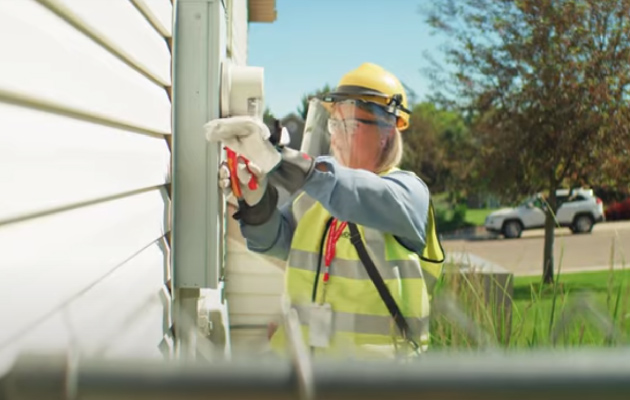
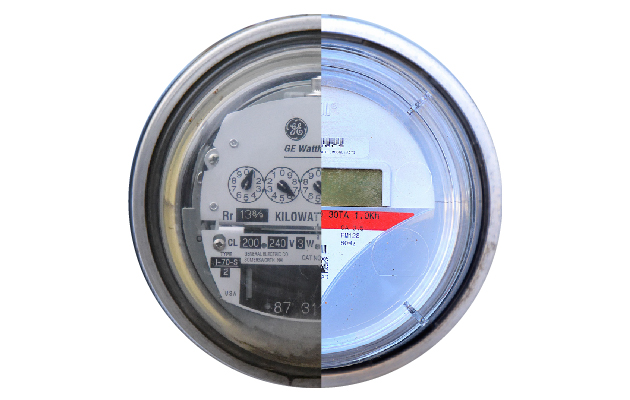
NorthWestern Energy will install 590,000 new electric meters and gas modules in Montana.
- This technology upgrade will allow two-way communication between NorthWestern Energy and its meters on customer homes and businesses.
- In most cases, the system will notify NorthWestern Energy of an outage.
- Crews can restore service faster.
- Current energy use information is available for customer questions about bills, energy use and opportunities for energy savings
- System voltage information identifies problems before those problems cause outages.
The energy landscape is changing — and so are our customers’ expectations. As we modernize the energy grid, including using two-way communicating meters, also known as smart meters, our customers will benefit.
Montana Digital Meter Upgrade
590,000
meters and modules will be replaced.
5 years
The project began in 2021 and runs through 2025.
60%
of all U.S. electric customers have smart meters today.
Moving Toward a Sustainable Energy Future
Moving Toward a Sustainable Energy Future
The energy grid is evolving, driven by the need to support more renewable resources as we transition to an even cleaner energy future. Smart metering provides more data on grid operations, which will allow opportunities for new customer programs and technology that will help balance the energy grid with renewable resources.
Advanced Meter FAQs
What is the advanced meter project timeline in Montana?
NorthWestern Energy began installation in Montana in 2021. Here is a list of approximate dates for the Montana Meter Upgrade project by area:
- Missoula Division: completed August 2022
- Butte Division: completed June 2022
- Bozeman Division: completed May 2024
- Billings Division: completed October 2024
- Lewistown District: completed October 2024
- Havre District: completed November 2024
- Helena Division: June 2024 – May 2025
- Great Falls Division: August 2024 – May 2025
Who will change my meter?
NorthWestern Energy contracted with Tru-Check to install the new digital meters, the same company that installed the first generation, one-way communication digital meters in 1998 that are in use today.
Tru-Check technicians will wear apparel with the Tru-Check logo and will carry a NorthWestern Energy contractor identification badge.
Will I have to pay for the meter?
No. The electric meters and gas modules are purchased and owned by NorthWestern Energy. They are part of our infrastructure, similar to our power poles and transformers.
When will the meters be installed and do I need to be home?
Most of the installations will occur Monday through Friday during business hours, though there will be cases when evening or weekend installations may be necessary. Customers don't need to be home.
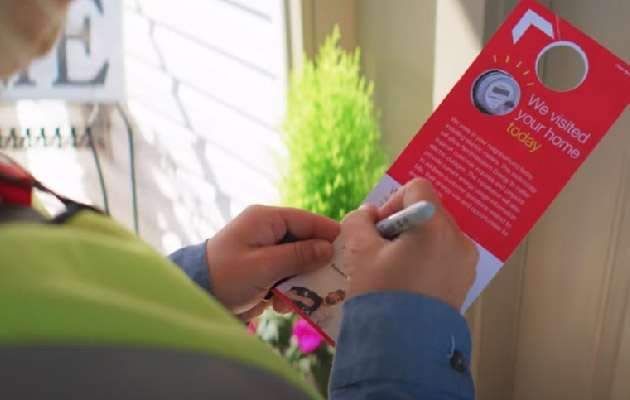
A door hanger will let residents know their upgrade was successful. If the technician cannot perform the upgrade, a door hanger will be left with instructions to call to make an appointment.
If you are both an electric and natural gas NorthWestern Energy customer, the new electric meter will be installed first and the new gas module will be installed during a follow-up visit to your home or business in about eight weeks.
What happens to the meter on my home or business now?
NorthWestern Energy has a contract to recycle the electric meters and gas modules in use now when new meters and modules are installed.
Are radio frequency (RF) emissions coming from the meters and modules?
Yes. The Federal Communications Commission (FCC) regulates the safety limits for all RF emissions, and smart meter and module emissions make up a small portion of the limit. The RF emissions of the one-way communication meters in use now and the two-way communication meters that are being installed for this technology upgrade are both approved by the FCC. Radio frequency emissions are also produced by common household devices such as microwaves, baby monitors and TVs.
Is customer information protected?
Yes. Customer privacy and security are NorthWestern Energy priorities. The company’s strict security standards have contributed to protecting the energy grid and customer privacy for years. The meters do not collect, store or transmit any personally identifiable information.
The meters measure total energy and cannot differentiate energy usage by appliance or anything else within a home or business. The transmitted energy use information is encrypted.What if I don’t want an upgraded meter?
Customers who want to keep their existing meters can call NorthWestern at 888-467-2669 or email NorthWesternEnergyMeters@northwestern.com to be added to the bypass list. Customers who previously requested an opt out do not need to contact NorthWestern again to be bypassed and keep their meters.
NorthWestern will be reaching out to customers who received an advanced meter despite their request to opt out. For those who still wish to opt-out, NorthWestern will ensure that the advanced meter is removed and replaced with a meter similar to the one that was there before. Customers will not be charged for this service.
Customers who have questions about the advanced meter opt-out program can contact NorthWestern at 888-467-2669
or the Montana Public Service Commission at 1-800-646-6150 or pschelp@mt.gov.
How do I read my meter?
If you have a non-communicating electric or gas meter, you can find information about how to read it and submit a self-read here.
Responding together after Montana’s severe windstorm
Date: Dec 19, 2025
TYPE: News
By NorthWestern Energy President & CEO Brian Bird, Vice President Transmission Mike Cashell and Vice President Distribution Jason Merkel
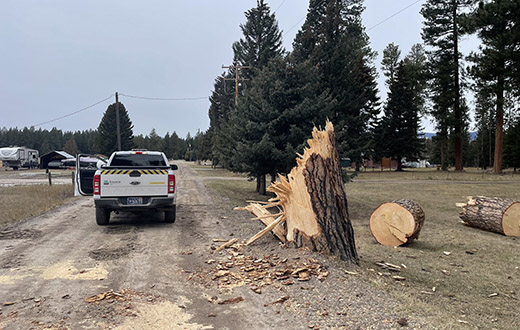
On Dec. 17, the severe windstorm that tore across Montana left widespread damage throughout the state. Trees toppled onto vehicles, houses and into powerlines, roofs and fences were shredded and trampolines flew like frisbees. There was significant damage to the electric system that powers our state.
At NorthWestern Energy, our focus is always on our customers. When the lights go out, life gets harder. We prepare in advance, staging crews, contractors, equipment and supplies across the region. When the storm hits, we respond immediately.
This challenge was immense. In some areas, winds were dangerously strong, and crews were forced to pause overnight for safety. In others, fallen trees blocking roads had to be removed to allow crews access. Despite these obstacles, our Montana teams restored service to 35,000 customers on Dec. 17 alone. By the evening of Dec. 18, more than 90% of outages caused by the windstorm were resolved.
But some communities and customers remain without power. Know we are working tirelessly. Crews are in the air assessing damage, on the ground replacing poles and lines, and in neighborhoods reconnecting homes and businesses. Every decision we make prioritizes restoring service as quickly and safely as possible.
Here’s how that process works:
- Transmission repairs come first. These high-voltage lines deliver power across long distances. When they’re damaged, thousands of customers are affected.
- Next are substations. They distribute power to neighborhoods and commercial areas. Sometimes we can reroute service from other substations while repairs are underway.
- Then distribution lines. These carry power from substations to communities, restoring service for hundreds at a time.
- Finally, individual service lines. These repairs bring power back to one or a few customers at a time.
This isn’t the first statewide weather event we’ve faced, however investments in advanced technology are making a difference.
Our new Advanced Metering Infrastructure means we have real-time data about outages, allowing us to plan repairs more efficiently than ever before. Alongside this technology, proactive efforts like year-round maintenance, strategic tree trimming, and continuous system upgrades strengthen our network and keep it resilient—even in extreme weather.
But when your home or business is dark for 24 hours or more, we understand it doesn’t feel that way.
Technology helps us track and attack outages, but it’s people who do the work.
We are incredibly grateful for NorthWestern Energy employees’ dedication and commitment to safety. The sheer volume of repairs, and in some cases remote work locations, meant delays in some cases in providing updates about estimated restoration times, information provided by the same crews working in the field and in neighborhoods. We know that’s frustrating, and we appreciate your patience.
Montana is a challenging place to deliver energy — with rugged terrain and more power poles than customers. But it’s also home to the best customers anywhere. Serving you is our privilege.